The bedroom fan on its lowest setting
The customers who come back for a second fan almost never want a stronger one. They want one that is quieter at the bottom of the dial, because by then the fan has stopped being about the heat and become the first step of going to bed.
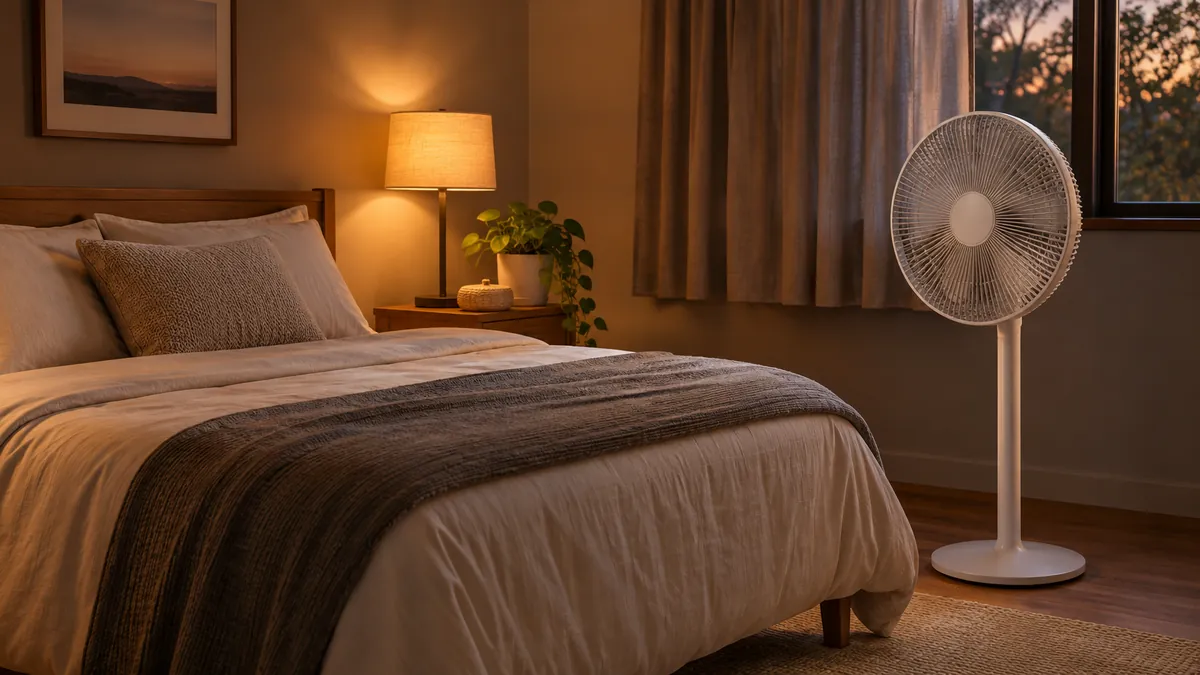
A sound that tells the house the day is over
Ask a man of sixty why he switches his fan on at nine thirty even in a mild month and he will usually shrug. Ask his wife and she will tell you that the hum is how the house knows the day has closed. The kitchen light goes off, the fan goes on, and something in both of them stops reaching for the next task.
That is not a coincidence of furniture. A repeated cue at a fixed hour is one of the oldest tools people have for steadying a routine, and routines are what many readers past fifty lean on when the head feels crowded. When the evening begins the same way every night, there are fewer small decisions to make at the moment when the mind is least eager to make them.
Why the room matters as much as the hour
Some people find that a cooler, darker room makes it easier to let go of the day. Sleep researchers have long written about temperature and light as signals the body reads in the evening, and the practical version of that is simple: a little moving air, a lamp instead of the ceiling light, and a screen that is put away rather than carried into bed.
A fan on its lowest speed does two of those jobs at once. It keeps the air moving without the roar that makes people turn the television up to compete with it, and its steady note covers the small sounds of the street that otherwise tug the attention back outward. Several customers have told us that the soft hum is the only "background music" they can sleep through.
What a settled evening may do for the next morning
People over fifty often say their sharpest hours come early, and that those hours depend on how the night before went. A tired head forgets where it put the glasses and loses the thread of a conversation more easily. That is ordinary, and it is one of the reasons a calm, repeated evening is worth protecting. Nothing here is a treatment; it is housekeeping for attention.
The readers who seem to get the most out of a routine keep it short. Three or four steps, done in the same order, are easier to keep for months than a long ritual that collapses the first busy week.
A plain version you could try this week
Pick an hour and keep it, weekends included, as best you can. At that hour, lower the lights in the bedroom and switch the fan to its gentlest speed. Put the phone to charge somewhere you cannot reach from the pillow. Write three short lines on paper about the day: one thing that happened, one thing still waiting, one name you met or heard. Then read or simply sit for ten minutes before turning the lamp off.
The note on paper is the part people skip and later wish they had kept. Writing the waiting task down tends to quiet the urge to rehearse it in the dark, and the line with a name gives the memory a small daily exercise in holding on to people.
When the routine stops working
If the evenings stay restless for weeks no matter what you change in the room, that is information worth bringing to a professional rather than solving with a bigger fan. Weeks of broken rest come from all sorts of places, and a few of those places are worth a professional eye.
If your nights have changed recently, if you wake unrested most days, or if you take medicines that affect sleep or alertness, talk it over with your physician before reshaping your evenings. A shop can describe a quiet room. Only someone who knows your health can tell you what your nights actually need.